
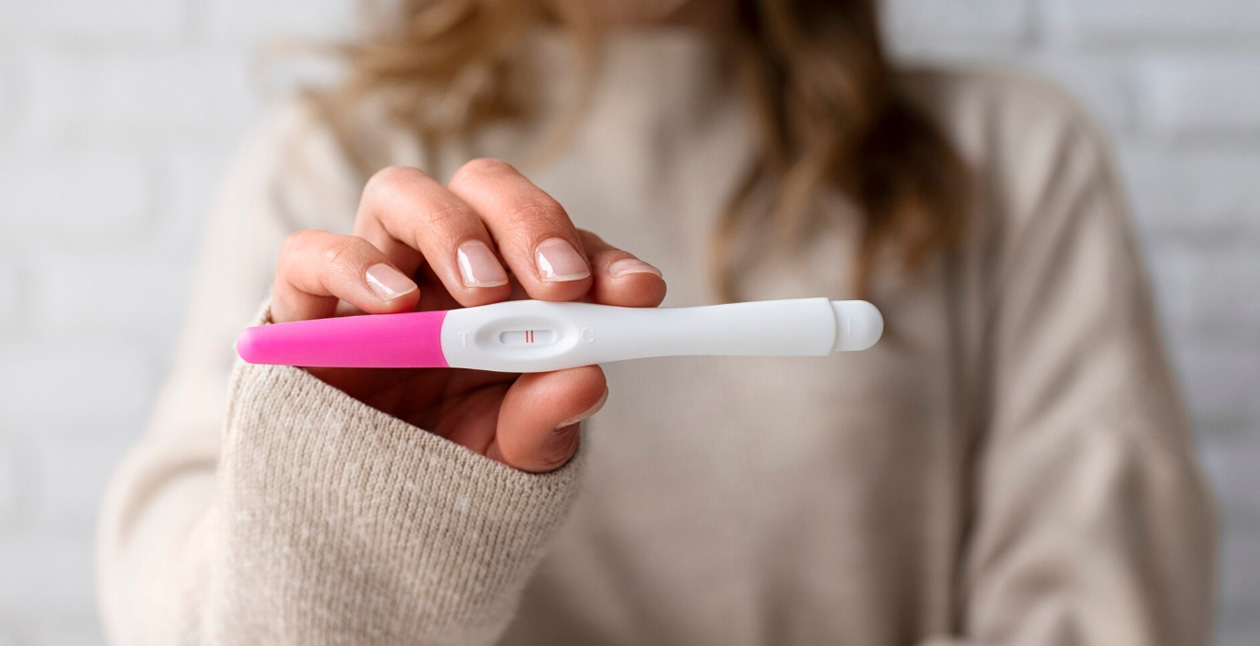
First Month of Pregnancy
You’re experiencing the most beautiful moments of your life, whether you’re waiting to welcome your baby into the world or watching them grow and change with each passing day!
In addition to happiness and excitement, you often feel stress and anxiety—emotions that are perfectly normal to experience on the journey of motherhood.
1st week
During the first week of pregnancy, you may still have your period.
This week is technically considered the first week of pregnancy, even though you are not yet pregnant at this stage.
It is extremely difficult to pinpoint the exact moment when the sperm meets the egg, since your partner’s sperm can survive in your body for several days before fertilization occurs.
That is why the first day of your last period marks the start of the forty weeks that pregnancy lasts.
Your body begins to produce estrogen and progesterone, the hormones necessary to prepare your body.
During your period, the egg prepares to travel down the fallopian tubes, hoping to be “captured” by a lucky and strong sperm.
2η 1st week
Your period has ended, and your body is preparing for conception.
Ovulation—the process by which a mature egg is released from the follicle—will occur shortly.
The egg travels down into the fallopian tubes and…
A joyful night kicks off the adventure!
Tip: It’s a good idea to start taking folic acid before you get pregnant.
3rd week
During this third week, the fertilized egg will implant in the uterus.
What is amazing is that at the moment of conception, the baby’s entire genetic code has already been written.
Its DNA has been fully synthesized.
From that moment on, all the details—such as whether it will be a boy or a girl, who the baby will resemble, the color of its hair, eyes, and skin, and its genetic traits—are already determined.
Of course, the baby’s sex can only be determined by ultrasound at 12 weeks.
4th week
The fertilized egg immediately begins to divide as it travels toward the uterus.
Immediately after fertilization, your baby’s sex—whether it will be a boy or a girl—is determined.
The sperm contains either the “X” chromosome (girl) or the “Y” chromosome (boy), and this determines your baby’s sex.
The cells contain all the necessary genetic information (DNA) to create the embryo.
The development of your baby begins with this single fertilized egg, which initially divides into 2, then 4, 8, and so on.
Forty-six chromosomes have combined to determine the physical characteristics of this new life.
The embryo reaches the uterus approximately 80 hours after ovulation.
The implantation process begins about 3 days later.
Implantation takes place in the walls of the uterus.