
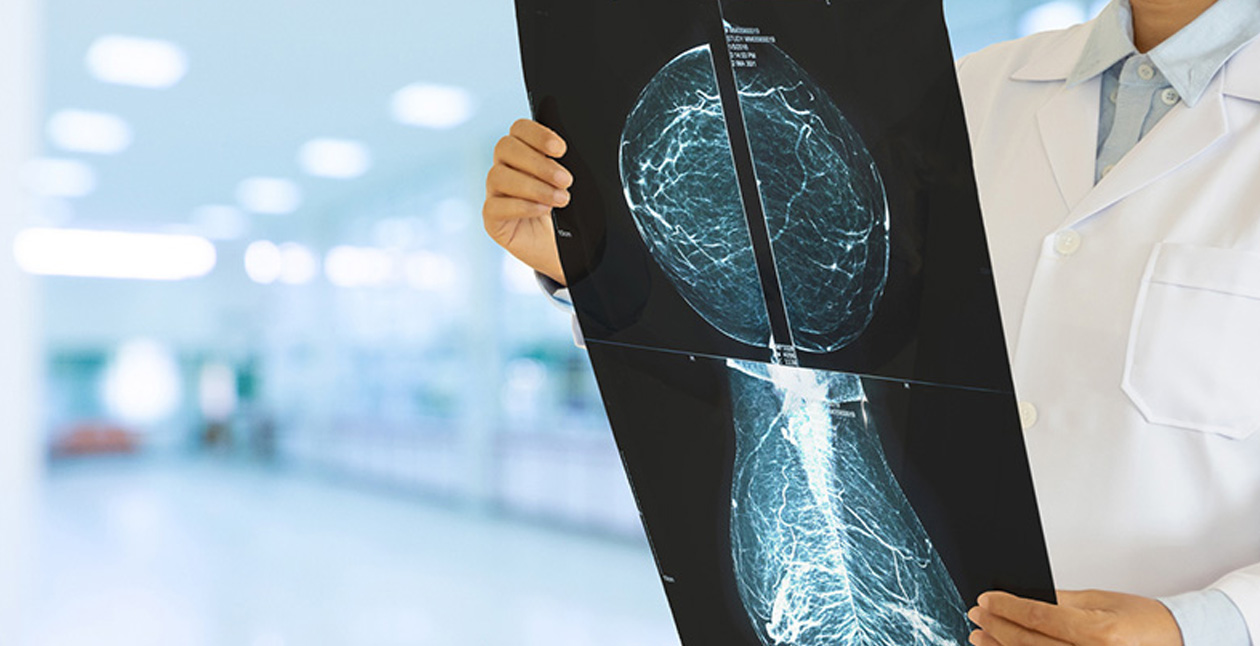
Mammography and Breast Ultrasound
What is a breast ultrasound, and when is it recommended? Does it replace mammography, or is it replaced by it?
The common perception is that younger patients and those with particularly dense breasts should undergo a breast ultrasound, while for others, a mammogram is sufficient. The truth, however, is that these are complementary tests. During an ultrasound, the breast is examined using sound waves. The exam is painless and involves no radiation. Because an ultrasound examines the breast at various levels and does not project the tissues as in a mammogram, this exam is more suitable for examining dense breasts, as we typically see in younger patients.
Ultrasound is also better suited for identifying and examining cystic lesions. Modern machines can “see” whether a tumor has blood vessels, which would classify it as a higher-risk category. They also offer 3D imaging, which aids in the differential diagnosis of certain findings. In addition to routine screening, ultrasound is used to investigate palpable findings as well as to mark tumors prior to their surgical removal. Ultrasound is also particularly useful in investigating microcalcifications that may be detected by mammography.
For routine annual screening, typically for women under 30, only ultrasound is used, while for women over 30, it may be supplemented with other diagnostic methods, usually mammography. Annual imaging screening should begin even earlier, even before the age of 25, in women with a family history of breast or ovarian cancer. For women over 35, the screening of choice is mammography, which is usually supplemented with ultrasound, as ultrasound is particularly valuable for “dense” breasts with significant fibroadenomatous components. The combination of the two methods increases the likelihood of detecting breast cancer by 17%, since in a lesion deemed “suspicious” by mammography, ultrasound can easily distinguish whether it is a simple cyst or a solid mass that requires further investigation. Ultrasound-guided fine-needle aspiration (FNA) of these lesions allows for histological examination and, of course, saves lives.