
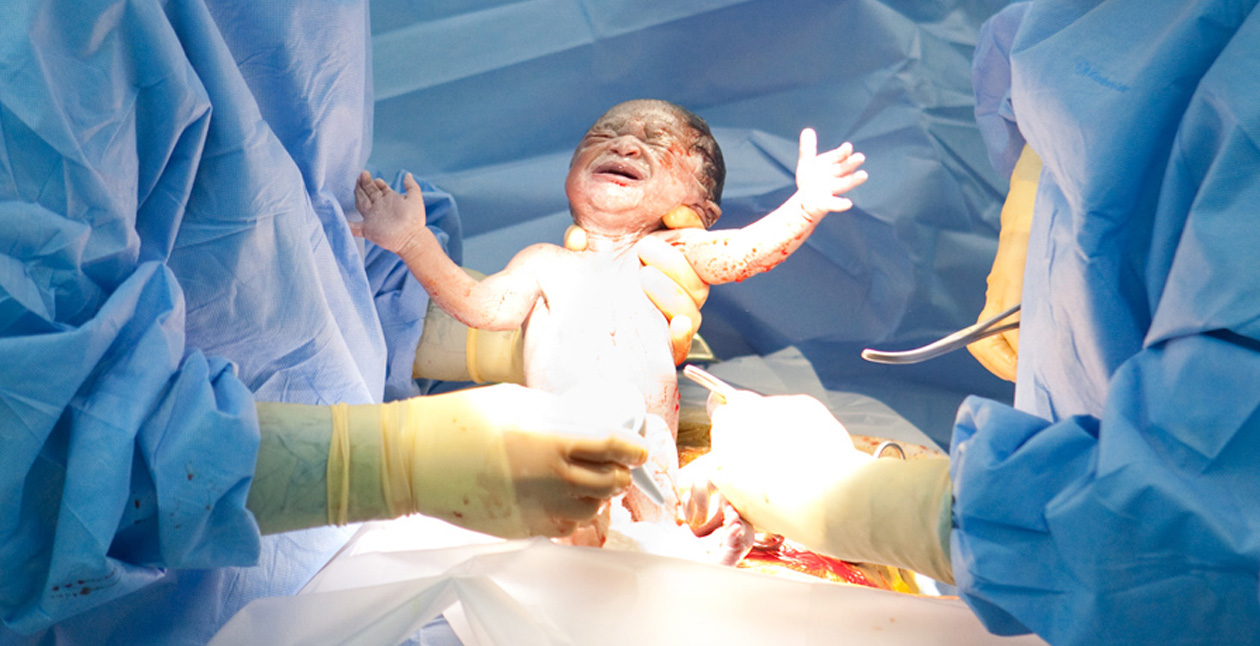
Cesarean Section
The term "cesarean section" refers to the removal of the fetus, placenta, and fetal membranes from the uterine cavity following a laparotomy and incision of the uterine wall. A cesarean section is performed in situations where vaginal delivery is not feasible or poses risks to the mother or the fetus. Some of the indications are considered absolute (e.g., placenta previa, cephalopelvic disproportion), while others are relative. In recent years, most women giving birth via cesarean section have opted for epidural anesthesia so they can see their baby as soon as it is born. However, in cases where the procedure is urgent—that is, when a complication arises during labor—general anesthesia is usually administered, primarily because epidural anesthesia requires more time and preparation.
Next, your gynecologist will take over:
- A small horizontal incision is made in the lower abdomen, and a second one at the bottom of the uterus.
- The amniotic sac is opened, the newborn is delivered, and handed over to the neonatal care team.
- The umbilical cord is cut, and if you’ve had an epidural, you can hold your baby in your arms.
- Finally, after removing the placenta, he sutures the uterus and the abdominal walls down to the skin of the abdomen.
The entire procedure is completed within 45 minutes. It takes about 5 minutes after the incision for the baby to be born, while suturing the uterine wall and the abdomen takes another 40 minutes. The incision may cause you some minor discomfort, which generally disappears within a week at most.
Today, special sutures are used that are absorbed by the skin, so there is no need for a doctor to remove them. In cases where non-absorbable materials have been used, it is necessary to have them removed, which is done by your gynecologist about a week after the C-section. Healing is complete within 10–15 days. It is also very important, if you plan to breastfeed, to inform your doctor. This is because epidural anesthesia is preferable to general anesthesia, both for you and for the baby. Specifically, the medications administered via the epidural do not “pass” to the baby, unlike general anesthesia medications, which may temporarily cause the baby to experience mild drowsiness.
Nevertheless, neither type of anesthesia is a contraindication for breastfeeding, which, according to the World Health Organization, should ideally begin within the first hour. In practice, of course, most women who give birth via cesarean section are unable to do so, mainly due to a lack of appropriate breastfeeding facilities in the surgical recovery ward. However, efforts are already underway to change this status quo in Greek maternity hospitals.