
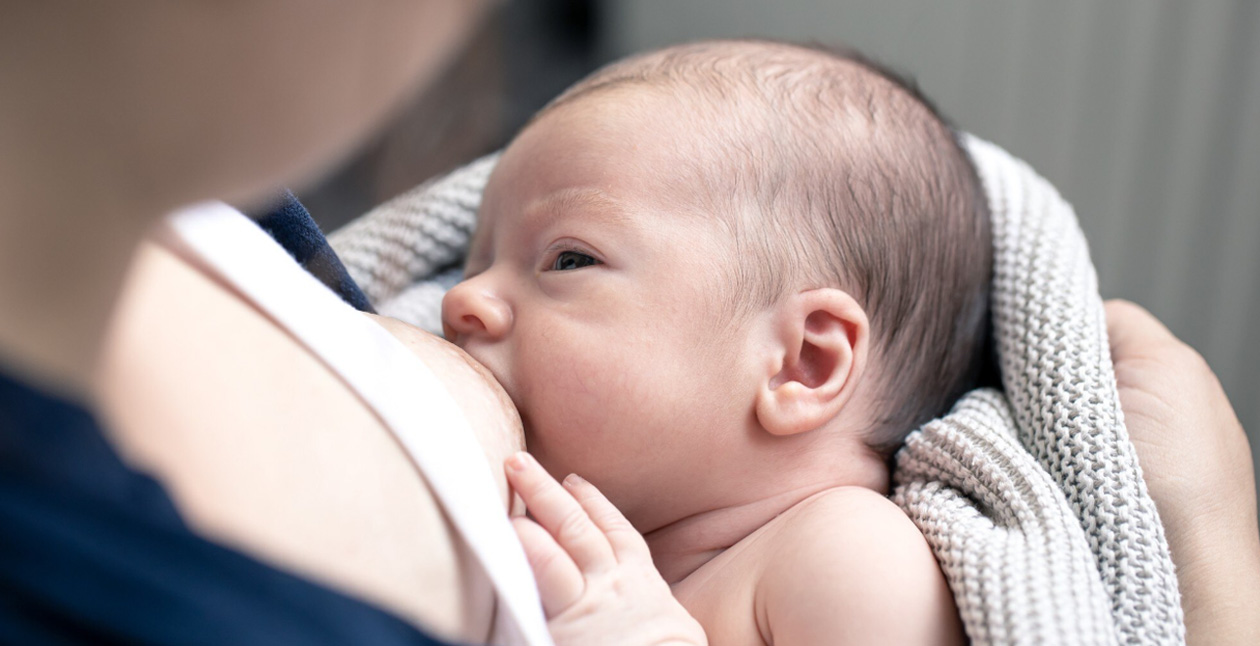
Breastfeeding
Breastfeeding is a gift of life. It is a gift from a mother to her newborn baby. For successful breastfeeding, you need desire, calmness, patience, and availability. Breastfeeding begins immediately after childbirth, when the infant shows the first signs of hunger. This is the best time to start, because the newborn is quite active and can latch on easily, even from nipples that present some difficulty. This way, the baby learns to breastfeed correctly from the very beginning and realizes that they still depend on their mother for survival.
Mother-baby rooming-in is highly beneficial for breastfeeding, as it helps you better learn to recognize your baby’s hunger cues and develop communication cues, while simultaneously offering calm, security, and protection to the newborn. Immediately after birth and the expulsion of the placenta, milk production begins, driven by the action of two hormones: prolactin and oxytocin. These hormones are produced in the pituitary gland, which is a gland located in the brain. The signal to start milk production in the breast is given by the baby itself as it nurses.
Breastfeeding stimulates the nerve endings in the nipple and triggers the mechanism that produces and releases milk. The sooner after childbirth and the more frequently the baby breastfeeds, the sooner colostrum, then foremilk, and finally mature milk will come in. Almost all mothers are capable of breastfeeding their children, and nature has ensured that breast milk production is proportional to the needs of both the newborn and the infant. Human milk provides all the nutrients a baby needs, in exactly the right proportions. Because breast milk is made specifically for human babies, it is easier to digest than other foreign substances, such as formula made from either cow’s milk or soy products.
Proteins, which are among the most important components of milk, vary greatly among different mammals. Foreign proteins can cause allergies, especially in very young infants. The protein in human milk forms a thinner layer in the baby’s stomach and is easier to digest than the protein in cow’s milk, which is found in standard milk. Also, a human baby does not need as much protein as a calf, which doubles its weight within two months, gaining up to 32 kilograms.
In contrast, human babies double their weight within five to six months, gaining a total of 3½ to 4½ kilograms. When a baby is breastfed, they are statistically less likely to fall ill with gastrointestinal infections and diarrhea. They are also less likely to contract respiratory infections and ear infections, as well as more serious illnesses such as pneumonia and meningitis. Breastfed babies also have a lower risk of Sudden Infant Death Syndrome.
In a study involving primarily middle-class families, babies fed formula had five times as many respiratory infections as breastfed babies. In another study, hospitalizations due to respiratory infections were twice as common among babies fed only formula. When breastfed infants did contract these types of infections, they were usually less severe. These studies took into account other factors contributing to respiratory illnesses, such as parents who smoke and the presence of other young children in the family. Especially in families where these factors were present, the protective effect of breastfeeding was even more significant.
The benefits of breastfeeding go far beyond mere physical advantages.
- Breastfeeding offers tremendous emotional benefits for the baby.
- For the baby, breastfeeding is a source of affection and security.
- Skin-to-skin contact stimulates the baby and strengthens the bond between mother and baby.
- Most breastfed babies cry less because they spend more time in their mother’s arms.
- Breastfeeding helps the mother interpret and respond more directly to the signals her baby gives her, which helps the baby better regulate their behavior and learn to trust themselves and others.
- Many mothers would agree that, for them, the emotional benefits of breastfeeding are the most important.